Embedded systems · Medical devices · Open source
The Berkeley Tricorder
A compact wireless physiological monitoring platform developed during my doctoral research at UC Berkeley and UCSF. It combined nine monitoring functions with custom analog electronics, low-power firmware, local storage, and wireless telemetry.
System design
Overview
A complete research platform spanning sensing physics, custom electronics, embedded acquisition, power management, wireless telemetry, local recording, and visualization software.
Custom analog front ends
Every sensing path was engineered in-house rather than assembled around dedicated physiological-monitor ICs.
Low-power firmware
MSP430 firmware coordinated sampling, power states, local storage, and measurement packaging.
Telemetry & storage
Wireless telemetry supported live monitoring while onboard storage protected measurements offline.
Research platform
Multiple studies used the system, and the platform helped form technical groundwork later commercialized by physIQ.
Hardware development
Development artifacts
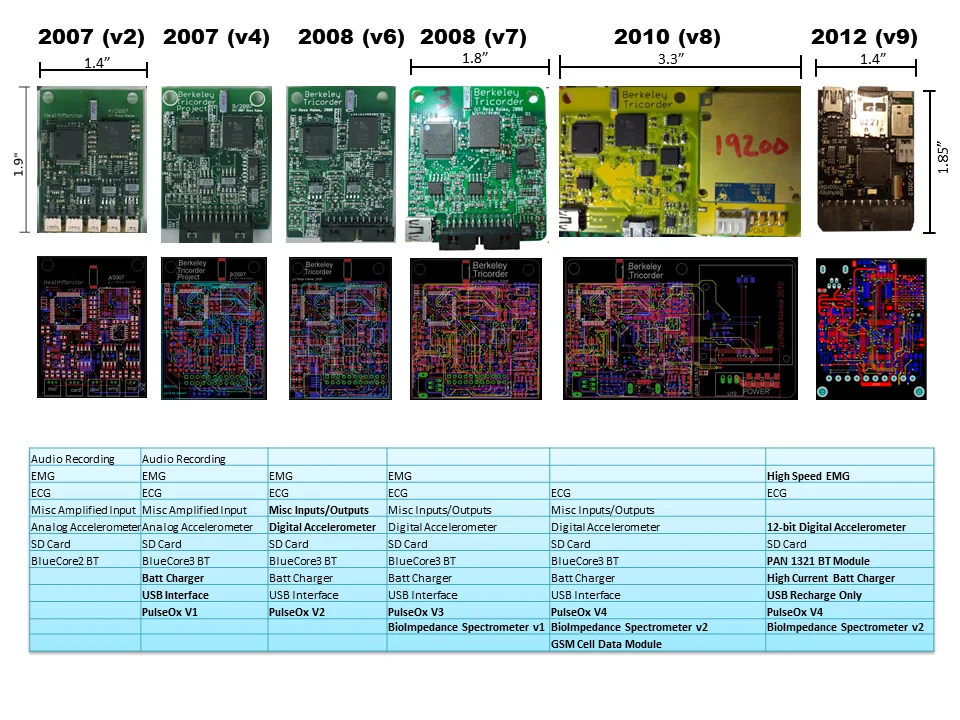
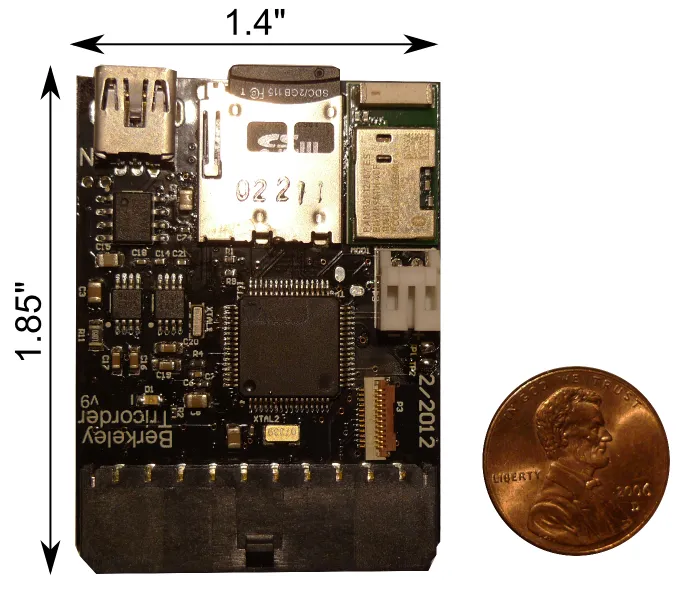
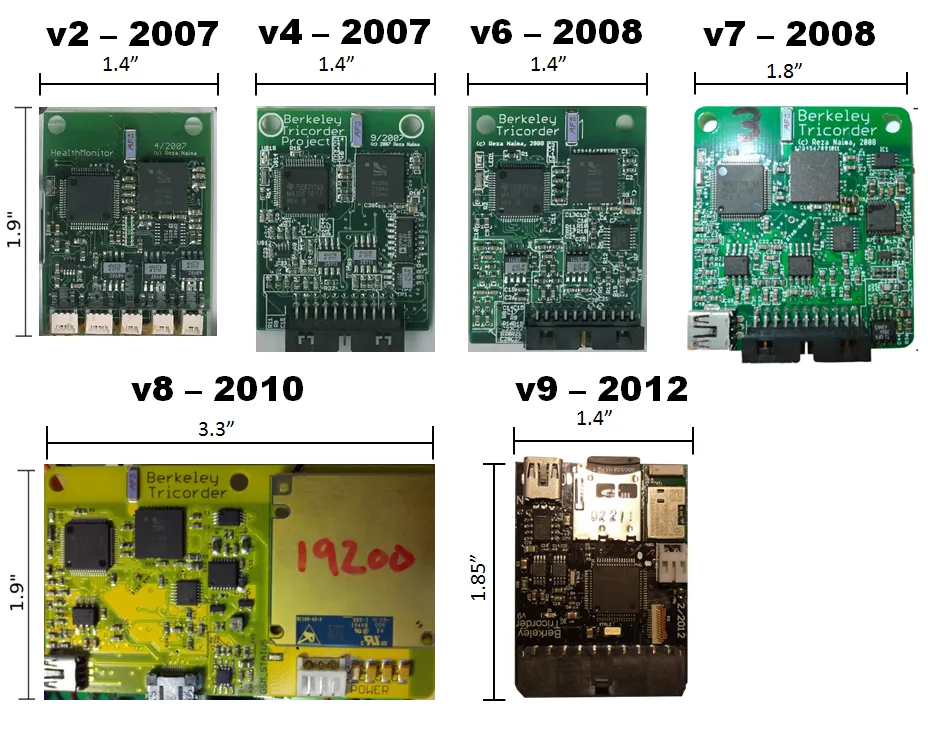
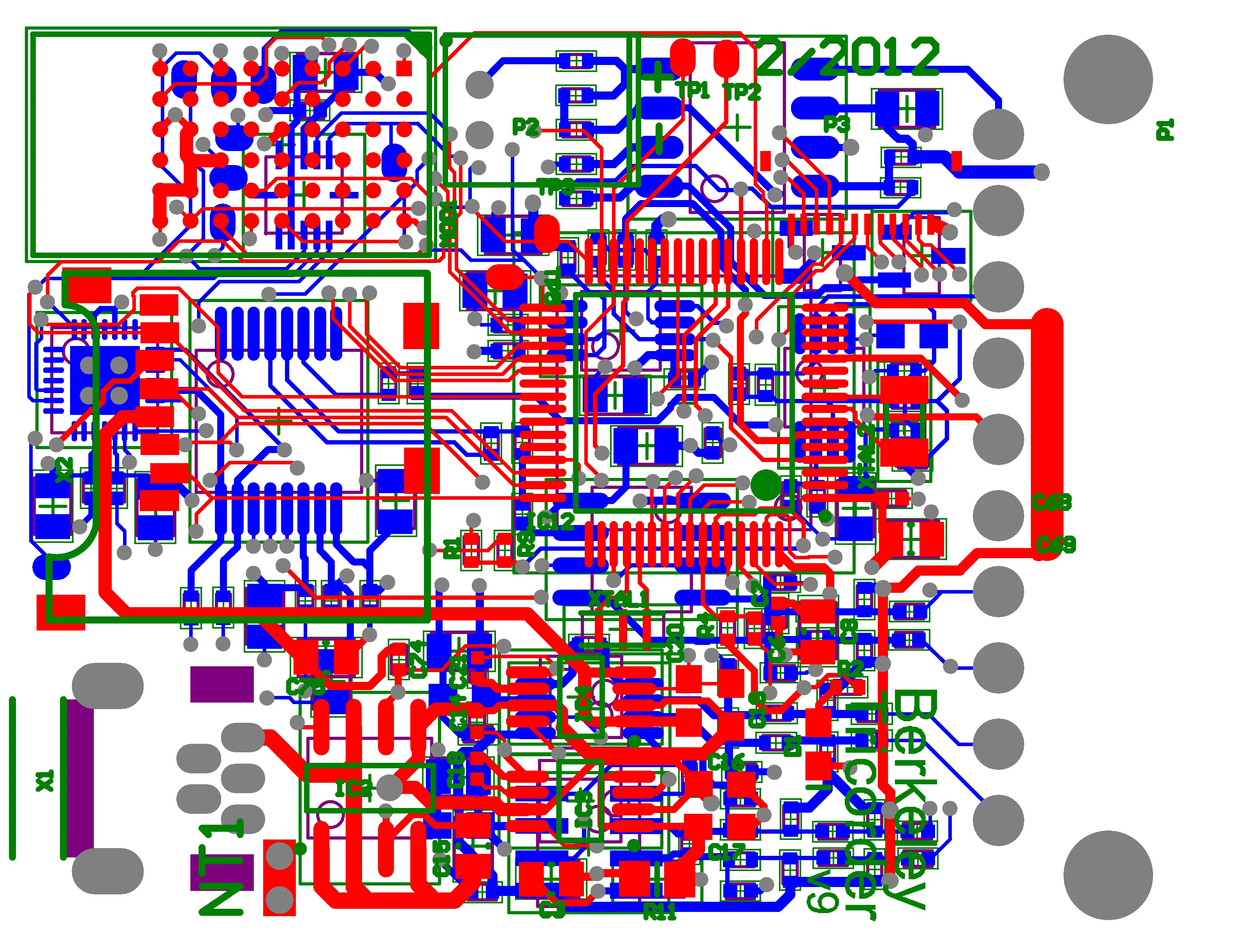
Nine hardware generations record the tradeoffs behind miniaturization, integration, signal integrity, and practical research use.
Engineering scope
Complete stack
The central challenge was making nine modalities coexist inside one low-power architecture and one usable research workflow.
Monitoring functions
A multimodal platform combining physiological measurement with telemetry and storage in a compact instrument.
Count follows the historical system description and doctoral thesis materials.
Across the complete stack
- Custom multisensor PCB
- Analog signal conditioning
- MSP430 embedded firmware
- Bluetooth communications
- ECG and EMG acquisition
- Bioimpedance measurement
- Pulse-oximetry subsystem
- Android data viewer
- C# visualization tools
- Human-research workflows
- Altium revision history
- Protocol documentation
Source and documentation
Project records
The public repository preserves hardware, firmware, viewer software, and thesis material. Original schematic PDFs remain available here.